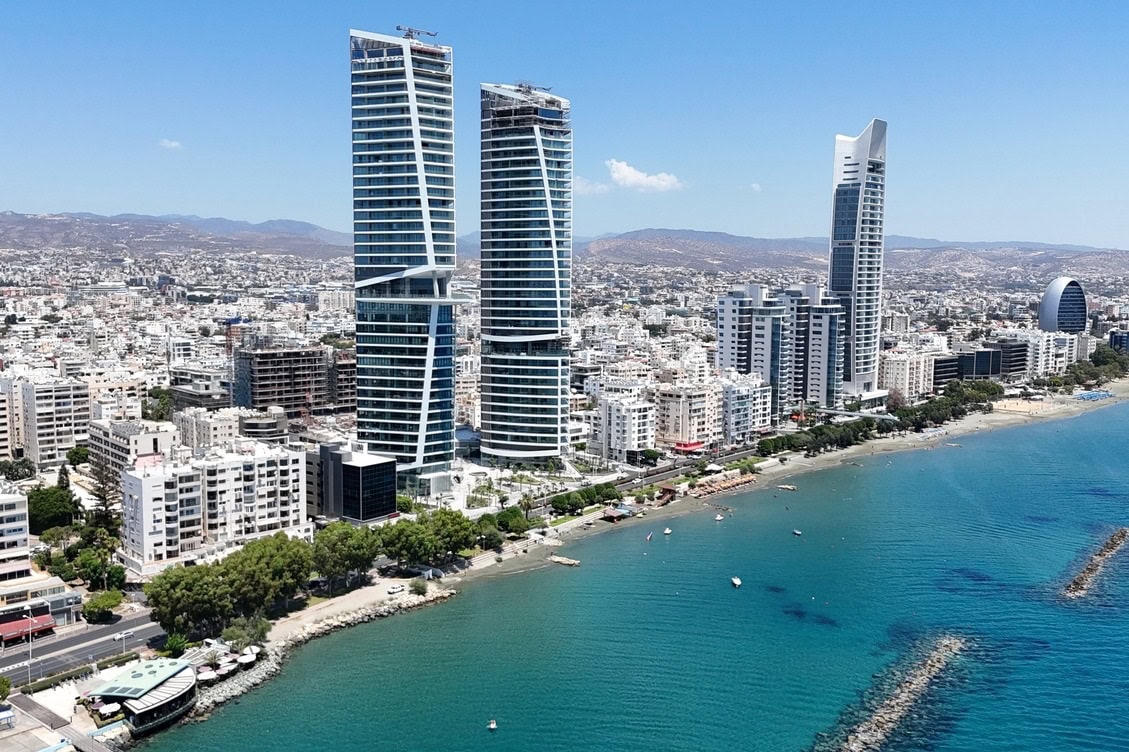
Every property market has turning points — moments where the data clearly shows what is coming before most people act on it. In Cyprus right now, two structural shifts are underway that sophisticated investors are tracking closely.
Trend 1 — Larnaca Is Overtaking Limassol on Growth Rate
For years, Limassol dominated every conversation about Cyprus property investment. But something significant happened in 2025: Larnaca outpaced Limassol in year-on-year apartment price growth. Larnaca's Apartment Price Index reached 150 points in Q4 2025 — almost identical to Limassol's 150.1 — having started the decade at a much lower base.
What Is Driving Larnaca's Rise?
The Larnaca Port and Marina Redevelopment — a €1.2 billion infrastructure project — is transforming the city's waterfront with a new marina, commercial development, hotel, residential towers and redesigned coastal promenade. Infrastructure projects of this scale historically generate 10–20% price premiums in surrounding areas over the years following completion.
The highest-conviction areas for the next five-year cycle are Mackenzie Beach, Drosia and Oroklini — all currently trading at discounts to equivalent Limassol property while showing stronger growth momentum.
Trend 2 — Short-Term Rental Yields Are Maturing Into a Stable Asset Class
Cyprus short-term rentals have become a mainstream investment vehicle with clear regulatory framework and predictable returns. Short-term rental yields in coastal areas currently range from 6 to 9% seasonally, with Limassol and Paphos leading in year-round demand.
The most active investors in 2026 are buying 1–2 bedroom apartments in walkable Limassol and Paphos locations at €180,000–€280,000 and achieving gross annual rental income of €16,000–€22,000. Net yields after management fees typically land at 5–7%.
Frequently Asked Questions
Is Larnaca better than Limassol for property investment in 2026?
Larnaca offers stronger price growth momentum and lower entry prices. Limassol offers higher absolute yields and a more liquid resale market. Larnaca suits longer-horizon capital growth; Limassol suits immediate yield and liquidity.
What rental yield can I expect from a Cyprus short-term rental?
Gross short-term rental yields in Limassol and Paphos typically range from 6 to 9%. Net yields after management fees and operating costs are typically 5 to 7%.
What are the regulations for short-term rentals in Cyprus?
Properties must be registered with the Cyprus Deputy Ministry of Tourism, requiring a fire safety certificate, basic amenity standards, and registration renewal every five years (renewal fee: €222).
Related Reading
- Apartments for Sale in Cyprus: Strategic Investor Guide
- Cyprus Property Prices: How Much Have They Risen Over 10 Years?
- Cyprus Real Estate Market Trends 2026
Continue Reading
Written by Marios Spyrou, Managing Director — Ni.Sea Realty Ltd | Licensed Real Estate Agency | R. N. 1378 | L.N. 690/E